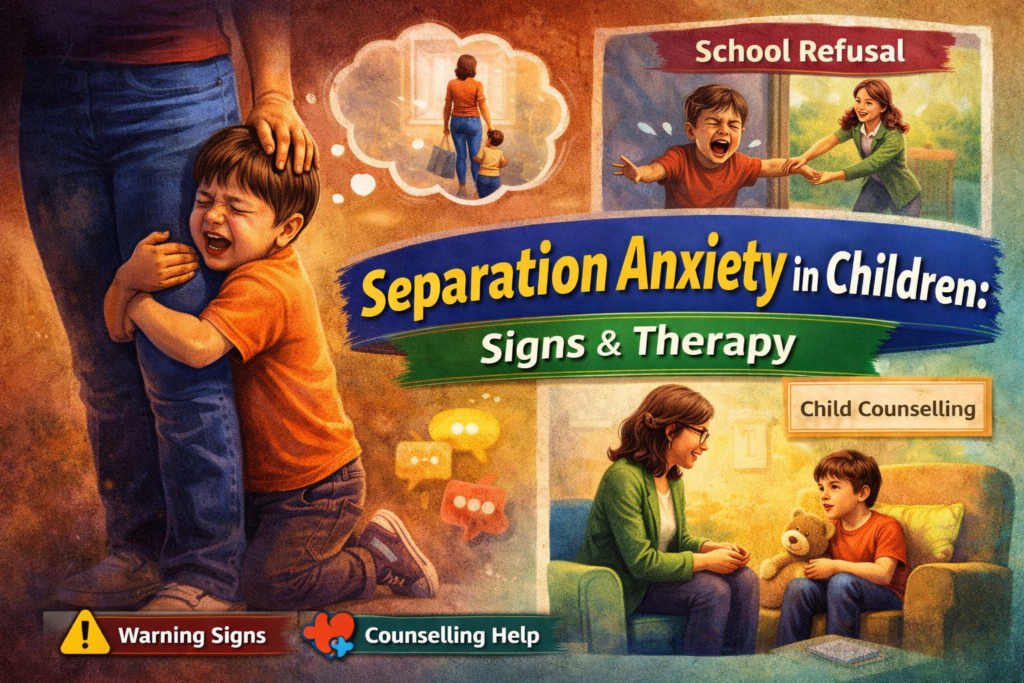
Separation anxiety is common in small children, especially between ages 1 to 6. A child may cry when the mother leaves, fear being alone, or refuse to stay with other family members. This is normal at early developmental stages.
But when the fear becomes too strong, lasts too long, and affects school or daily life, it may be a disorder called Separation Anxiety Disorder (SAD). Medical references describe SAD as one of the most common childhood anxiety disorders, where the child experiences excessive distress about separation from caregivers.
In Kolkata, many parents search for child counselling in garia because their child:
- refuses school
- cries excessively
- panics if parent leaves
- shows physical symptoms like stomach pain
Signs of Separation Anxiety in Children
A child may show separation anxiety in these ways:
🧠 Emotional signs
- fear that something bad will happen to parents
- constant worry about being left alone
- panic or crying during goodbye
🏠 Behaviour signs
- refusing to sleep alone
- following parents everywhere
- refusing daycare/school
🤒 Physical signs (very common!)
- stomach ache
- nausea
- headache
- vomiting before school
These physical symptoms are real for the child and not acting.
Normal Separation Anxiety vs Separation Anxiety Disorder
| Factor | Normal Anxiety | Separation Anxiety Disorder |
| Age | 1–5 years common | Continues beyond expected age |
| Intensity | Mild crying | Severe panic + daily disruption |
| School impact | Child adjusts | Refuses school repeatedly |
| Symptoms duration | Short-term | ≥4 weeks in children (often longer) |
| Need for therapy | Not always | Recommended |
Studies show separation anxiety disorder prevalence around 4–5% in children and adolescents.
Why Separation Anxiety Happens
In real Kolkata family settings, common triggers include:
- sudden school change
- parent working schedule change
- child being overprotected
- scary experiences (illness, hospital stay, accident)
- family stress/conflict
- child is sensitive, shy, or introverted
How Therapy Helps (Best Approach)
Professional child psychologist in garia support usually includes:
1) Child Counselling (Play-Based Therapy)
Children often can’t explain their fear with words. Therapy uses:
- storytelling
- drawings
- role play
- play therapy
This makes it easier to identify the root cause of fear.
2) Gradual Exposure Routine
Instead of forcing the child, therapists recommend step-by-step progress:
- parent leaves for 2 minutes → returns
- then 5 minutes → then 10 minutes
- then short visit outside home
3) Parent Counselling (Very Important)
Many times, separation anxiety is unintentionally strengthened when:
- parents give extra attention only during crying
- parents become anxious during separation
A counselling plan teaches parents:
- how to respond calmly
- how to build independence
- how to say goodbye with confidence
4) School Support Plan
For school refusal, a child counsellor may coordinate steps like:
- short school hours initially
- safe teacher contact
- positive reinforcement
Simple Home Routine Parents Can Follow
| Step | What to Do | Benefit |
| Predictable goodbye | Same goodbye ritual daily | Reduces fear |
| Do not delay goodbye | Don’t keep returning | Builds trust |
| Praise small progress | “You did it!” | Motivation |
| Practice independence | 10–15 min solo play | Confidence |
| Improve sleep routine | early sleep + calm bedtime | emotional stability |
When to Consult Child Counselling in Garia?
Take professional help if:
- your child refuses school for many days
- crying lasts more than 30–45 minutes regularly
- physical symptoms increase before separation
- the child becomes aggressive or panicky
This is where child behaviour problem counselling can help massively.
Conclusion
Separation anxiety is common, but if it becomes extreme, therapy and structured routines give excellent improvement. Early support from a child psychologist in garia ensures the child grows with confidence and emotional stability.